
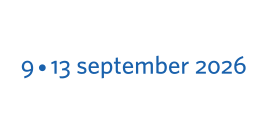

scopri gli eventi

Maurizio Torchio was born in Turin in 1970. After graduating in Philosophy, he works at the Fiat Historic Center. He dedicated the documentary Votate agli stipendi Fiat (2003) to the world of work and corporate life in the 1950s and 1960s, collecting the testimonies of female employees at the Turin-based company. In 2004, he published Tecnologie affettive (Sironi), a collection of six short stories connected by the relationship between humans and technical knowledge. This highly original debut received almost unanimous critical acclaim, as did Piccoli animali (Einaudi, 2009), an allegorical work "capable of evoking a literature not enslaved to fiction, which thinks, searches, provokes, and disturbs" (Goffredo Fofi). Six years later, he released Cattivi (Einaudi, 2015), a novel – winner of the Dessì, Lo Straniero, and Pisa awards – that explores the complexity of the prison universe with striking realism, adopting the point of view of a life prisoner to recount the wounds, loneliness, and compressed feelings of both guards and inmates. His narrative reaches new expressive heights in his subsequent novels L'invulnerabile altrove (Einaudi, 2021) and La peggior specie (Sellerio, 2026), a noir novel, the latter, which unsparingly challenges both our food civilization and the philosophy of the animal rights struggle.
(photo: Twitter @torchiomr)
